THE PHYSICS OF FAILURE


Structural Fragility in the Defense Technology Industrial Base
🎯 EXECUTIVE SUMMARY
This report presents a comprehensive industrial and technical analysis of the systemic vulnerabilities characterizing the contemporary Western defense technology sector.
Under the analytical framework of "FakeSoap"—a metaphor describing products that present a sanitized, frictionless exterior while dissolving under the chaotic pressures of actual combat—this investigation challenges the prevailing orthodoxy of software-defined warfare and modular expeditionary capabilities.
The analysis is grounded in a rigorous synthesis of operational data from active theaters in Ukraine and the Red Sea, forensic examination of Government Accountability Office (GAO) records, and technical auditing of emerging defense business models including Elbit Systems, Anduril Industries, Palantir Technologies, and Firestorm Labs.
The Thesis:
The Western Defense Industrial Base (DIB) is engineering systems optimized for a permissive, bandwidth-rich, and logistics-heavy environment that no longer exists.
The divergence between the "clean" warfare marketed by venture-backed defense firms and the "dirty," friction-heavy reality of peer conflict (involving the PRC and localized clusters like Ukraine's Brave1) has created a "Physics of Failure."
This failure mode is defined by four structural flaws:
- Trust: Proprietary opacity prevents repair.
- Lock-in: Vendor capture stifles adaptation.
- Supply Chain: Critical dependency on adversarial materials.
- Attrition: Economic insolvency against mass.
💸 PART I: THE ECONOMICS OF ATTRITION
The most immediate and quantifiable manifestation of the "Physics of Failure" is the unsustainable economic calculus of modern Western interception and strike complexes.
The Western DIB has historically optimized for "Exquisite" performance—systems designed to achieve near-perfect probability of kill ($P_k$) against high-value, manned platforms. This doctrine is now colliding with the reality of "attritable" unmanned warfare, resulting in cost-exchange ratios that are structurally insolvent.
1.1 The Red Sea Equation
The ongoing naval campaign in the Red Sea against Houthi forces serves as a live-fire laboratory for this economic disparity. US and allied naval vessels are tasked with protecting commercial shipping lanes from a barrage of One-Way Attack (OWA) drones.
The data reveals a catastrophic divergence between the cost of defense and the cost of the threat.
Current naval engagements rely on the Arleigh Burke-class destroyer's Aegis Combat System deploying Standard Missile-2 (SM-2) and Standard Missile-6 (SM-6) interceptors.
- SM-2 Block IIIC: ~$2.1 million per round.
- SM-6: Upwards of $4.3 million per unit.
- Aster 15 (French): ~$1.1 million per unit.
In stark contrast, the Houthi-operated OWA drones—primarily Iranian-designed Shahed-136/131 derivatives—operate on a fundamentally different economic curve ($20k - $50k).
Strategic Implications of Magazine Depth
The failure is not merely financial; it is logistical. An Arleigh Burke-class destroyer (Flight IIA) possesses 96 Vertical Launch System (VLS) cells. Reloading at sea is technically perilous and doctrinally rare.
If a swarm attack involves 20 drones, and the ship fires two interceptors per target, the vessel expends 40 rounds—roughly 42% of its total VLS capacity—in a single engagement.
Ships must withdraw to secure ports (Djibouti, Bahrain) to rearm. The adversary, leveraging cheap systems launched from civilian trucks, maintains a faster resupply loop.
"A high-tech force is defeated simply by being bankrupted of its munitions."
1.2 The Switchblade Paradox
The Ukraine conflict confirms that "exquisite" Western systems struggle to compete with "good enough" mass-produced alternatives.
The Switchblade 300 Failure
- Cost: $60,000 - $80,000 per unit.
- Result: Ukrainian operators criticized the small warhead and proprietary data link, which proved susceptible to Russian EW jamming.
- The Market Response: Ukraine abandoned the concept for FPV drones ($400/unit). For the price of one Switchblade, Ukraine fields 120 to 160 FPVs.
The Russian Adaptation (Alabuga)
Leaked documents reveal Russia has successfully localized the Shahed-136 production.
- Target Cost: $48,800 (dropping to $10k-$35k at scale).
- Volume: 6,000 units over 2.5 years.
These drones function as sponges for Western air defense. If Ukraine expends a $1M NASAMS missile to kill a $35k Shahed, Russia wins the economic war.
1.3 The Sea Baby: Asymmetric Naval Warfare
Ukraine's development of the "Sea Baby" Unmanned Surface Vessel (USV) further illustrates the economic inversion.
🎭 PART II: THE ILLUSION OF SOFTWARE SUPREMACY
A secondary failure mode lies in the "Silicon Valley" approach to defense: the belief that superior software Operating Systems (OS) can overcome kinetic friction.
Companies like Palantir, Anduril, and Elbit Systems have built valuations on this premise. Field realities suggest a disconnect defined by bandwidth, latency, and lock-in.
2.1 The "Black Box" of Trust (Palantir)
Palantir's Gotham and Maven Smart System (MSS) are architected for "rich" data environments. In a tactical edge environment where communications are degraded to kilobits per second due to jamming, these heavy architectures struggle.
- "Data Room" vs. "The Trench": Palantir assumes a stable environment. The reality is a dugout with intermittent Starlink.
- Edge AI: While Palantir acknowledges the need for Edge AI, the current architecture remains heavy.
- Sovereignty: Ukraine developed its own tool, Delta. It is cloud-native but controlled by the Ukrainian military. It can integrate a Telegram bot reporting a missile sighting within minutes. Palantir's systems represent a "vendor lock."
The "Ontology" is not just software; it is a structural compliance architecture. It sells Administrative Security (Role-Based Access Control) while creating Structural Insecurity (Centralized Failure Points).
By demanding the customer map their data to the Vendor's Ontology, the Vendor owns the logic layer. The customer retains the data, but loses the ability to understand it without the Vendor's lens.
2.2 Anduril's Lattice: The Integration Wall
Anduril's "Lattice" OS is marketed as hardware-agnostic integration.
- Vendor Lock-In as Feature: Lattice effectively becomes the gatekeeper. Replacing Anduril requires ripping out the entire C2 infrastructure.
- The "Lattice Mesh" Fallacy: Lattice relies on a Mesh network. In Ukraine, the RF spectrum is actively weaponized. Russian R-330Zh Zhitel EW assets target the very control links Lattice uses.
- Project Convergence: During US Army exercises, "integration seams" and bandwidth limitations plagued data transfer, belying the marketing of "seamless connectivity."
The Retreat from Software
The ultimate admission of the "Software-Defined" failure is Anduril's Pivot.
After years of pitching "Lattice" (Software) as the differentiator, Anduril leased a 1.2 Million Sq Ft factory in Long Beach (Arsenal-1). Why? Because in a contested environment, software without mass is a hallucination.
2.3 Elbit Systems: The "Iron Mountain"
Elbit Systems exemplifies the traditional "Prime" model of proprietary lock-in.
- Right to Repair: In Ukraine and Romania, proprietary software locks prevent local maintainers from repairing Watchkeeper drones.
- TDP Denial: The withholding of Technical Data Packages (TDPs) prevents deep repair.
- Logistics Latency: Broken components must be shipped to a certified depot (Poland/Israel), removing the asset from the fight for weeks.
"Western tech is priced as a capital asset but dies like a disposable one because of IP lock-in."
2.4 The Historical Precedent: F-35 ALIS
The F-35's Autonomic Logistics Information System (ALIS) is the anchor case for this failure mode.
- Server in a Box: ALIS required massive 800lb server racks that were undeployable in austere conditions.
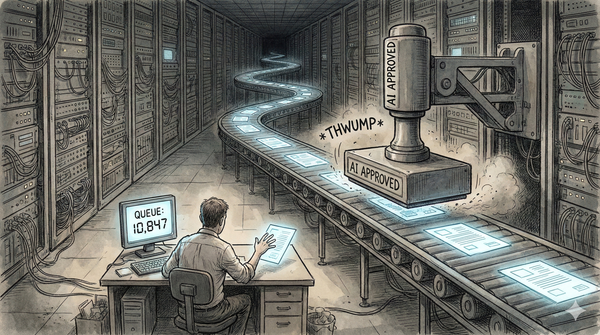
- Data Paralysis: The system grounded aircraft based on false data, creating "administrative paralysis."
- The Pivot: The transition to ODIN (luggage-sized) admits the failure, but the philosophy of centralized digital control remains a vulnerability.
🚧 PART III: THE LOGISTICS OF "EXPEDITIONARY" FAILURE
The industry promotes the concept of the "Factory in a Box"—deploying manufacturing to the front lines. Firestorm Labs epitomizes this trend with its "xCell" containerized drone factory.
A thermodynamic analysis reveals this concept to be logistically flawed.
3.1 The Energy Penalty of 3D Printing
Firestorm's xCell uses HP Jet Fusion 5200 series printers.
- Power Load: 12 kW continuous load.
- Environment: Powder agents (PA11, PA12) require strict HVAC humidity control.
- Generator Requirement: 30 kW Tactical Quiet Generator (MEP-805B).
- Fuel Burn: ~2.6 gallons of diesel per hour.
The Fully Burdened Cost of Fuel (FBCF)
In contested theaters, the FBCF can reach $400 per gallon (accounting for convoy security and delivery).
It is physically more efficient to ship a pallet of 50 folded, injection-molded drones than to ship the liquid fuel required to generate the electricity to print them.
3.2 The Integrator Fallacy
Defense Primes argue that "Field tests measure reliability." This is the Integrator's Lie.
When industry veterans like Amit Weissman—formerly the Concept System Engineering Team Lead for the Israeli Prime Minister's Office and a specialist in "System of Systems" integration—argue that "field tests validate reliability," they are measuring the wrong variable. Field tests measure performance—whether the system executes its nominal function. They do not measure integrity. A backdoored drone performs flawlessly until it receives the trigger to fail.
3.3 The "Kitted Parts" Admission
The "Factory in a Box" (Firestorm xCell) claims to decentralize production. But the reality, as signaled by the venture capital layer itself, reveals the core deception.
Joanna Guy, Senior Partnerships & Brand Lead at Booz Allen Ventures, has characterized the critical components—optics, batteries, motors, flight controllers, and silicon—as merely "kitted" (pre-manufactured elsewhere and shipped in).
The xCell container does not make a drone. It assembles a drone from components that traveled the same vulnerable supply chain. The only thing being "manufactured" on-site is the plastic airframe—the least critical component.
The Verdict: If your "modular factory" relies on a FedEx shipment of motors from Shenzhen, it is not a factory. It is a Hobby Shop with a 3D printer.
This model violates the core mandate of the National Defense Strategy (NDS), which requires the ability to "securely resupply" forward forces. A factory that halts production because a shipping container was interdicted is not a strategic asset; it is a liability. The enemy doesn't need a software-defined factory; they need a welder.
The NDAA locked the front door (Hardware) but left the data layer wide open.
🧨 PART IV: THE SOVEREIGNTY TRAP
The "Trust" flaw extends to the molecular level. The Western DIB is built on a foundation of sand—specifically, rare earth oxides mined and processed in the People's Republic of China.
4.1 The Magnet Monopoly
High-performance electric motors require sintered neodymium-iron-boron (NdFeB) magnets.
- China Controls: 90% of processing and 92-93% of global permanent magnet manufacturing.
- The "Blue UAS" Deception: The DoD certifies drones as secure if they lack Chinese chips. This certification does not extend to magnets. Almost every "American-made" drone (Skydio, Teal) relies on motors with Chinese magnets.
- Export Threats: In 2023/2024, China threatened export controls on Gallium and Germanium. In a Taiwan scenario, they can sever the magnet supply instantly.
4.2 The Titanium Cliff
It is not just magnets. It is the skeleton of the aircraft.
4.3 Protectionism as a Business Model
Unable to compete on price, US companies have turned to regulatory capture via measures like the "Countering CCP Drones Act."
- Skydio: Spent over $560,000 in 2023 lobbying.
- RF Fragility: Skydio drones have faced criticism for RF fragility, with service bulletins warning against using handheld radios near controllers.
- The Price: A DJI Mavic 3 Enterprise costs ~$3,000. A comparable "Blue UAS" drone costs $15,000 - $30,000 and is often "20% as effective."
China's Vertical Integration
Contrast this with China's "Defense Innovation Cities" (Baotou for magnets, Shenzhen for electronics). A Chinese drone maker can prototype a motor and have it manufactured down the street in 24 hours. A US maker waits weeks for a trans-Pacific shipment.
🔍 PART V: INSTITUTIONAL PATHOLOGIES
The "Physics of Failure" is maintained by a procurement system that rewards compliance over capability.
- GAO & The LCS: The Littoral Combat Ship promised "plug-and-play" modules (72-hour swap). In reality, swaps took weeks. The Navy cancelled the ASW module after billions in spend.
- Sole Source Abuse: Agencies use "urgent need" to bypass competition, locking in high unit costs for platforms like the RTX Coyote.
5.2 Lobbying and Litigious Monopolies
The "Physics of Failure" is maintained by a procurement system that rewards litigation over lethality.
- Anduril: Aggressively pursues government contracts through "performative litigation," reporting lobbying expenses of $390,000 in a single quarter.
- Palantir: Famously sued the US Army to force adoption of its software. Once installed, the data ontology locks the customer in. Palantir's lobbying spend reached $1.61 million in Q4 2025 alone.
This is not competition; it is regulatory capture.
5.3 The Blue UAS Barrier
The Defense Innovation Unit (DIU) created "Blue UAS" to secure the supply chain. In practice, it created a Certification Tax.
- Barrier to Entry: Getting certified requires expensive third-party cyber assessments.
- Stifling Innovation: By defining a rigid list of "approved" components, the framework prevents rapid adaptation.
⚔️ PART VI: ADAPTIVE LETHALITY
6.1 Ukraine: The "Brave1" Model
- Metric: Lethality per dollar.
- Mechanism: Decentralized procurement. "Soldier-Developer" loops.
- Scale: Targeting 1-2 million drones in 2024.
6.2 China: Civil-Military Fusion
China treats its commercial drone sector (DJI, Autel) as a dual-use reserve.
- Metric: Market Dominance.
- Mechanism: Subsidize the commercial sector to destroy global competition.
- Resilience: Because the supply chain is domestic, it is immune to the interdiction tactics that would cripple US production.
6.3 The US: The "Prime" Trap
- Metric: Program compliance.
- Mechanism: Multi-year Programs of Record.
- Result: We buy the "Switchblade 600" in small batches while the adversary buys 500 FPVs for the same price.
⚠️ CONCLUSION: THE SOAP DISSOLVES
The "FakeSoap" metaphor holds true. Western defense tech is selling a sanitized vision of war: networked, data-rich, and precise. This business model is designed for Peacetime Revenue, not Wartime Lethality.
This vision relies on assumptions that have been falsified:
- Trust: That hardware will work (It doesn't: ALIS, LCS).
- Connectivity: That the network is available (It isn't: Jamming).
- Supply: That we can build more (We can't: Magnet dependence).
- Sustainability: That we can afford the exchange rate (We can't).
The Pivot:
To survive, the West must pivot to:
- Industrial Sovereignty: Mining and refining our own inputs.
- Open Architecture: Breaking the IP locks to allow repair.
- Attritable Mass: Building cheap, "dirty" weapons that respect the physics of cost.
Without this, the "Physics of Failure" guarantees that the West will run out of money and munitions long before it runs out of enemies.
APPENDIX: THE FOUR LAWS OF FAILURE
LAW 1: THE LAW OF OPAQUE FRICTION Opacity in peacetime equals Friction in wartime. If you cannot audit the code, you cannot repair the kill chain. LAW 2: THE LAW OF ECONOMIC GRAVITY You cannot defeat a $50,000 drone with a $4,000,000 missile. Insolvency is a defeat condition. LAW 3: THE LAW OF LOGISTICAL PARASITISM Any "expeditionary" system that increases the fuel burden on the convoy is a parasite, not a force multiplier. LAW 4: THE LAW OF SOVEREIGNTY If you do not own the mine, the refinery, and the logic, you do not own the weapon. You are merely leasing it from the supply chain.🔥 Download the Full Structural Audit (PDF)